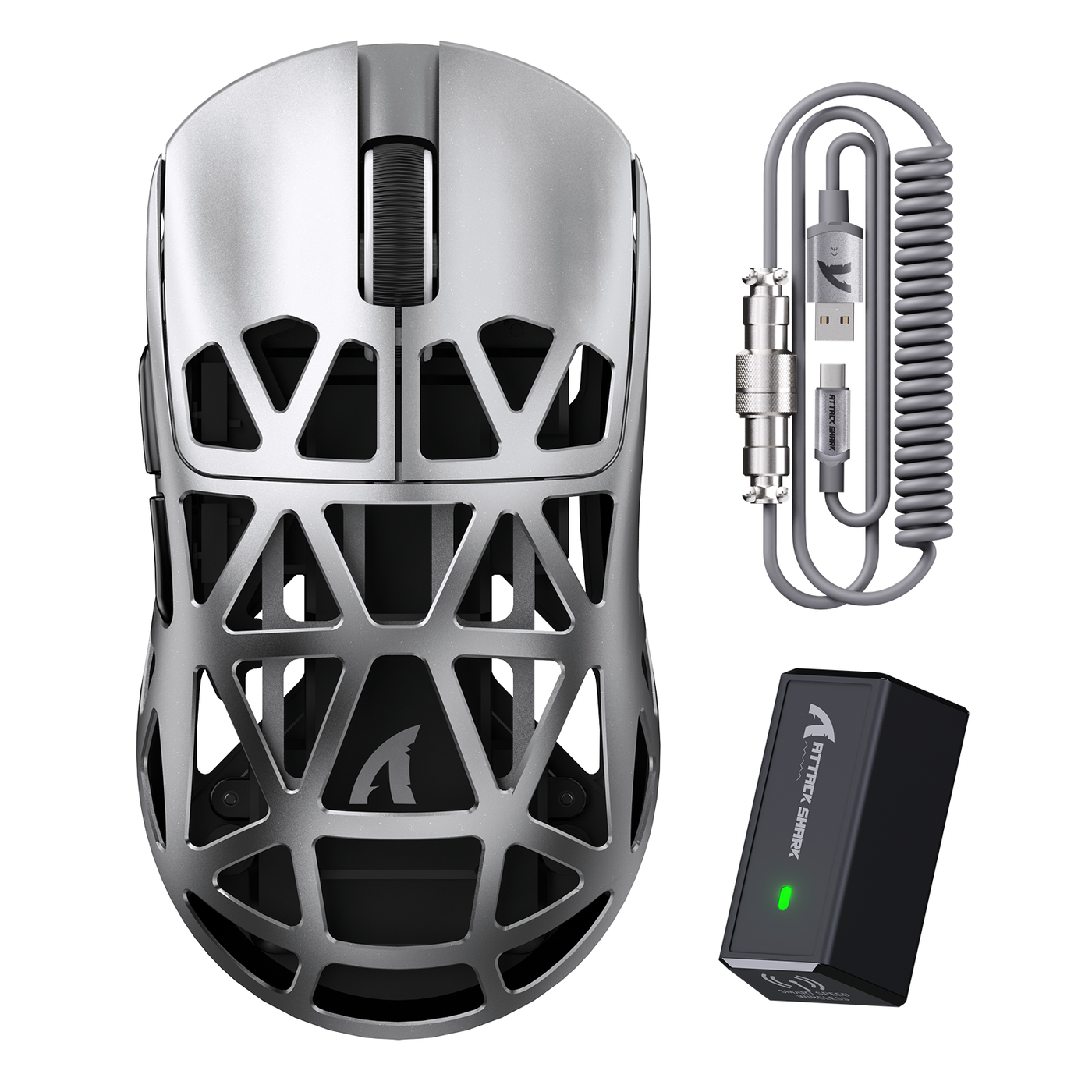
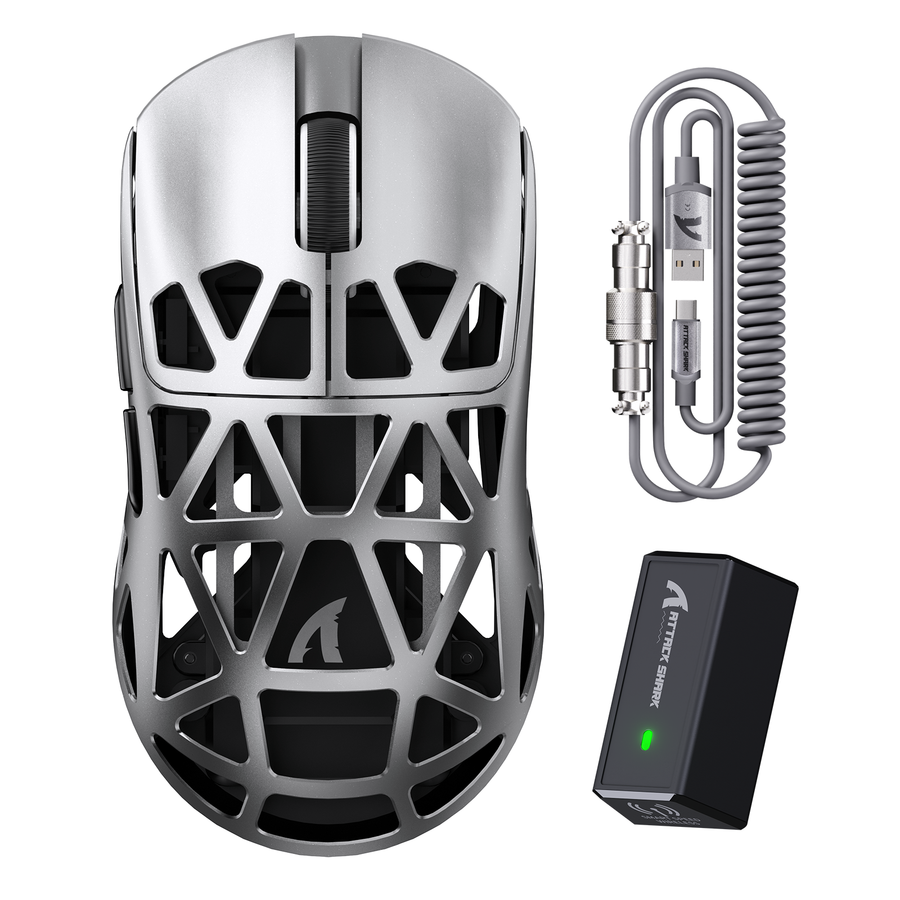
Polling rate is how often your mouse tells your computer where it is and what its buttons are doing, measured in reports per second, or Hertz (Hz). That's the whole definition. A gaming mouse polling rate of 1,000 Hz means the mouse sends 1,000 of these updates every second. The number is a timing spec, not a proof of accuracy or overall speed. Before you compare 1,000 Hz, 4,000 Hz, and 8,000 Hz on a product page, it helps to see what the number converts to in milliseconds and what it can't tell you.

What Does Polling Rate Mean on a Gaming Mouse?
Polling rate meaning, in plain terms: it's the count of position and click reports a mouse sends to your PC each second. The polling rate and polling interval documentation describes this as the rate at which the device reports information, with the interval being the gap between those reports.

The interval in milliseconds is 1,000 divided by the rate in Hz. A lower Hz number means a longer wait between reports, and a higher one means a shorter wait. Here's how the common values translate:
| Polling rate | Nominal interval | What it means |
|---|---|---|
| 125 Hz | 8 ms | A report every 8 milliseconds |
| 1,000 Hz | 1 ms | A report every 1 millisecond |
| 4,000 Hz | 0.25 ms | A report every quarter millisecond |
| 8,000 Hz | 0.125 ms | A report every eighth of a millisecond |
These figures are calculated by dividing 1,000 by the polling rate in Hz. For example, 125 Hz equals 8 ms between nominal reports, and the higher rates scale down from there. The chart below shows the same gap visually, shrinking as the Hz number climbs.
Nominal Mouse Reporting Interval by Polling Rate
Nominal time between mouse reports, calculated as 1000 divided by polling rate. These intervals are not total click-to-action latency.
View chart data
| Category | Nominal interval (ms) |
|---|---|
| 125 Hz | 8.0 |
| 1,000 Hz | 1.0 |
| 4,000 Hz | 0.25 |
| 8,000 Hz | 0.125 |
Treat every number in that table as a nominal interval between reports, not a full click-to-action latency figure. The report interval is only one link in a longer chain that includes your sensor, cable or wireless connection, and your PC. That distinction matters more once you start comparing specs on a shopping page.
Polling Rate vs. DPI, Sensor Quality, and Click Latency
Polling rate, DPI, sensor quality, and click latency answer four different questions, and mixing them up leads to bad comparisons. Each one tells you something specific, and none of them can substitute for another.
Polling Rate vs. DPI
Polling rate tells you how often the mouse reports data. DPI (dots per inch) tells you how many movement counts the mouse sends per inch of physical motion. A mouse can have a high polling rate and a low DPI, or the reverse. Neither number by itself tells you whether the mouse will feel comfortable or track smoothly for your grip and desk space.
Polling Rate vs. Sensor Quality
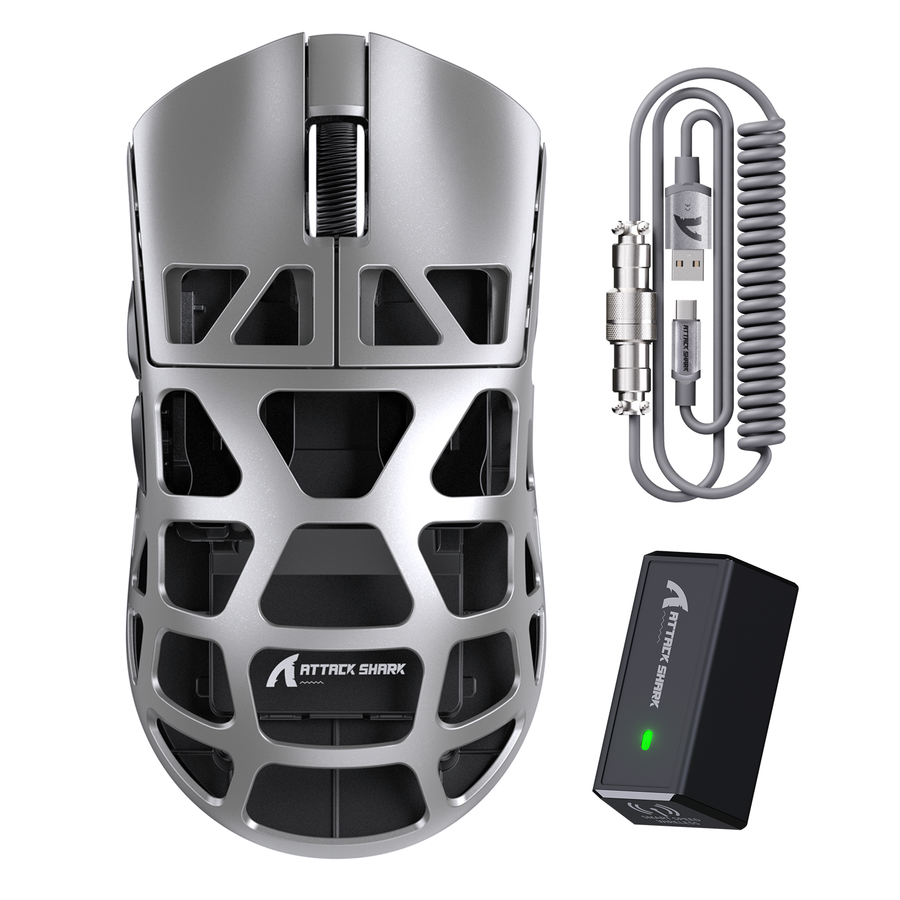
Sensor quality is about how well the mouse tracks movement, including smoothing, acceleration behavior, and consistency at different speeds. That's a separate engineering question from how many times per second the mouse reports. A high polling rate cannot fix a sensor that tracks poorly or doesn't suit your surface. Treat polling rate and sensor performance as two separate specification rows worth checking on their own, the way our R2 8K mouse listing lists its return rate, sensor model, and DPI range as distinct entries rather than one combined score.
Polling Rate vs. Click Latency
Click latency covers the time from a physical button press to the resulting action reaching your system, which is a broader response-path question than polling rate alone. Polling rate is just one timing interval inside that path. You cannot calculate total click latency from the Hz number on a spec sheet, so don't treat a high polling rate as a stand-in for measured click-latency data.
Does a Higher Polling Rate Affect Gaming Performance?
A higher polling rate can reduce input-display timing jitter in specific conditions, but it does not guarantee a noticeable or universal performance gain. The effect depends heavily on your display and the task at hand.
Where the Timing Difference Can Matter
Fast cursor movement paired with a high-refresh display is where a shorter reporting interval is most likely to matter. Research on mouse-to-display timing found that as input and display frequencies get closer together, higher polling rates can reduce input-display jitter in high-refresh conditions, since the mouse's report timing lines up more closely with how often the screen refreshes. That's a possible benefit, not a promised one.
Why the Benefit Is Not Universal
The same study tested polling rates on 240 Hz and 360 Hz displays and found that most participants did not reliably perceive the difference between 1,000 Hz and 8,000 Hz mice, and their pointing-task performance did not change significantly across the tested rates. That result is bounded to the displays, devices, and controlled task used in the study. It doesn't prove every player or every setup will get the same outcome, but it's a useful check against assuming the highest number always wins.
Polling Rate Is Not the Whole Response Path
Even where jitter reduction shows up, the nominal report interval is still not your total click-to-action latency. Your connection type, host PC conditions, and game engine all play a role in what you actually feel. Don't convert a polling-rate spec into a promised in-game reaction time; it's one input into a longer chain.
How to Read a Polling-Rate Number While Shopping
Read a polling-rate number as a starting point, not a final verdict. Convert it to milliseconds, then check whether your setup can actually use it before deciding it matters.
If the Listing Says 1,000 Hz
A 1,000 Hz rating means a 1 ms nominal interval between reports. That's a common, well-supported baseline for most games and everyday use. Treat it as a reference point rather than proof that the mouse is slow or limited, and keep checking fit, sensor evidence, and other specs before deciding.
If the Listing Says 4,000 Hz or 8,000 Hz
These ratings translate to 0.25 ms and 0.125 ms nominal intervals. Before treating either as relevant, confirm the connection mode you plan to use actually supports that rate. For a USB connection, Microsoft's USB endpoint documentation describes how device speed and host-controller conditions affect the USB timing details, so the listed polling interval is not a complete end-to-end latency specification. If you're curious what your current setup reports, the mouse polling-rate tool can show a live reading, and shoppers specifically looking for higher-rate hardware can browse 8000 Hz gaming mice to compare listings.
What to Check Beyond the Number
Verify the polling rates your intended connection mode actually supports, since wired and wireless modes on the same mouse don't always match. Your display's refresh rate and the games or tasks you use also affect whether a shorter reporting interval is relevant, with high-refresh, fast-motion use giving a higher rate more reason to matter. Then compare shape, weight, sensor evidence, and any measured click-latency data to see whether the mouse fits your hand and your game. A larger Hz claim shouldn't override a mouse that doesn't suit your grip or setup.
FAQs
What does polling rate change in practice?
It changes how often the mouse sends position and button updates to your computer. In some high-refresh-display conditions, a higher rate can reduce input-display timing jitter, but it does not automatically improve aim, accuracy, or your total click latency.
Is 8,000 Hz polling rate overkill?
Not automatically, but it isn't universally necessary either. In the controlled study cited above, most participants did not significantly distinguish 1,000 Hz from 8,000 Hz on 240 Hz and 360 Hz displays, so treat 8,000 Hz as context-dependent rather than a must-have upgrade for every setup.
Is 1,000 Hz or 8,000 Hz better?
Neither is universally better. 8,000 Hz has a shorter nominal report interval, but whether that matters depends on your display's refresh rate, your connection mode, your game, and how the rest of the mouse fits your hand.
Polling rate is a timing specification: it tells you how often a mouse reports, not how accurate, fast, or comfortable it will feel overall. Convert the Hz number to milliseconds, keep it separate from DPI, sensor quality, and click latency, and check your display, connection, and physical fit before deciding whether a higher rate is worth chasing.