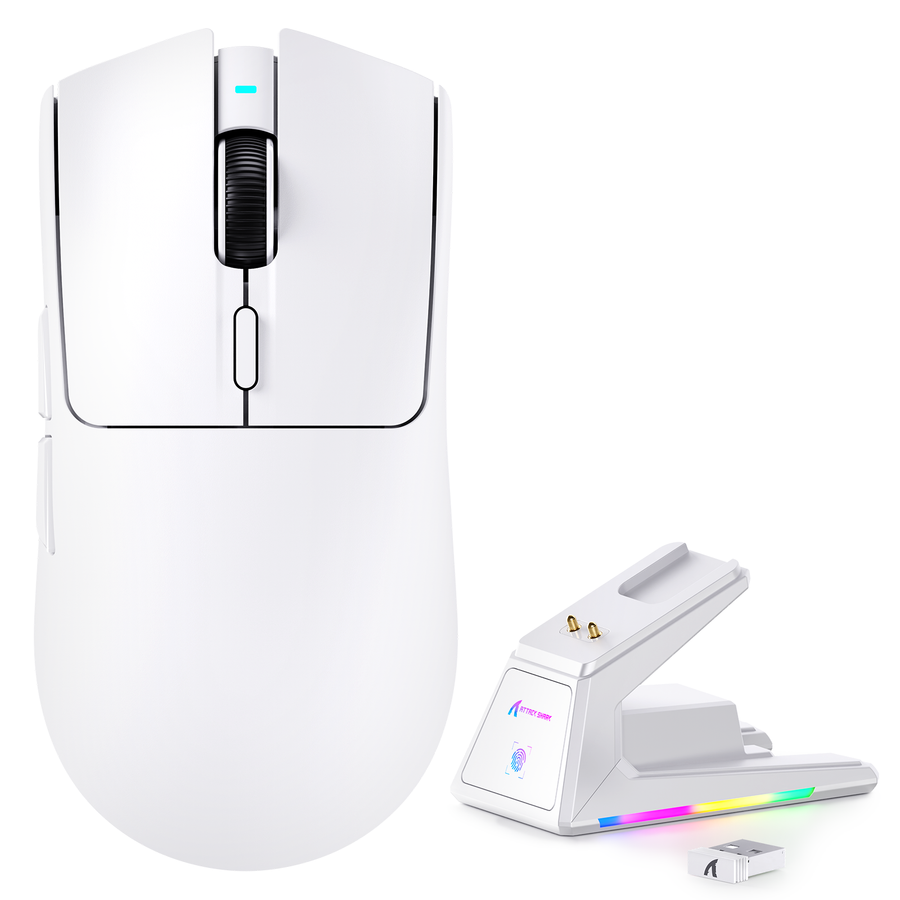
Buying a gaming mouse for its sensor name alone is the wrong test. The better value question is whether the mouse tracks consistently at the settings you actually use and whether its polling rate, DPI range, and connection mode are documented well enough to trust. A newer sensor generation can help in specific setups, but it does not automatically improve your aim. This guide breaks a gaming mouse sensor into the parts that change gameplay and the parts that mostly change the box copy, so you can decide where your next dollar actually helps.

Which Gaming Mouse Sensor Features Are Worth Paying For?
Complete implementation and consistent tracking matter more than a sensor's name or its single biggest number. The table below ranks each spec by what it really measures and when it deserves a higher price tag.

| Feature | What It Actually Measures | When It's Worth Paying For |
|---|---|---|
| Tracking and implementation | Whether reported movement matches your hand movement without skips or drift | Almost always the top priority; a documented, stable implementation should come before any single spec |
| DPI (dots per inch) | The sensitivity range the sensor can be set to | Only when your preferred sensitivity sits near the low sensor's ceiling |
| IPS (inches per second) | How fast you can move the mouse before tracking breaks down | Only for fast, low-sensitivity swipes that approach a real, confirmed limit |
| Polling rate | How often the mouse reports position to your PC | Mostly a baseline check; paying more matters only with a high-refresh display and a tested need |
| Surface, firmware, and wireless implementation | How well the sensor's raw capability survives your desk surface, driver settings, and connection mode | Whenever the listing does not document these details for a premium sensor |
Treat this matrix as the starting filter. The next dollar you spend should solve a bottleneck you can name, such as a confirmed tracking gap or a documented missing feature, not a spec you have not tested against your own setup.
What DPI and IPS Mean for Real Gameplay
DPI and IPS describe capability ceilings, not accuracy scores. Match each one to how you actually play instead of chasing the highest number on the box.
DPI Is a Setting Range, Not an Accuracy Score
A sensor's maximum DPI is the top of its adjustable range, not a promise of sharper aim. Set DPI based on the sensitivity and in-game settings you actually use. A higher maximum DPI does not establish better accuracy on its own. What matters is whether the sensor tracks cleanly at the specific sensitivity you settle on during setup.
IPS Matters Only When Movement Speed Creates a Limit
IPS measures how fast you can physically move the mouse before the sensor starts losing position data. This only becomes relevant during fast, low-sensitivity swipes, the kind common in full-arm aiming styles. If you play at moderate sensitivity and never notice skips during quick flicks, a lower IPS ceiling is not costing you anything. Pay for extra headroom only after a fast-swipe style makes the lower ceiling plausible or a tracking problem shows up in testing.
When Higher Polling Rate Is Worth the Money
Reliable 1000 Hz is the sensible default for most buyers; 2000 to 8000 Hz is a conditional upgrade for high-refresh setups, not a universal improvement.
What Polling Rate Actually Measures
Polling rate is a report-frequency setting: it controls how often the mouse sends a position report to your PC each second, measured in hertz. It describes how often data arrives, not how accurate that data is. A higher setting means more frequent reports, not automatically better aim.
When 1000 Hz Is the Better Value
- Reliable 1000 Hz is the practical default for ordinary displays, standard PCs, and most competitive or casual games.
- It gives consistent, well-tested reporting without adding cost, extra battery drain, or system overhead.
- Put the money you save toward shape, switches, or a documented wireless implementation instead of a polling upgrade you may never notice.
When 2000–8000 Hz Is Reasonable
- Consider it only if you run a 240 Hz or faster display and want smoother, less jittery cursor movement at that refresh rate.
- A controlled study testing 240 Hz and 360 Hz display setups found that most participants could not reliably tell 1000 Hz apart from 8000 Hz, and its pointing task found no significant performance effect across the tested polling rates. Treat that as the evidence boundary, not a universal result for every game or PC.
- Confirm your system holds stable frame times at the higher setting before paying extra for it; if it does not, the reliable baseline is the better buy.
Is PAW3395 Enough, or Is a Newer Sensor Worth It?
A documented PAW3395-class sensor is a practical default for most gaming; a newer, higher-polling tier is worth paying for only when you can name a specific need it solves.
PAW3395 Is a Capability Baseline, Not a Guarantee
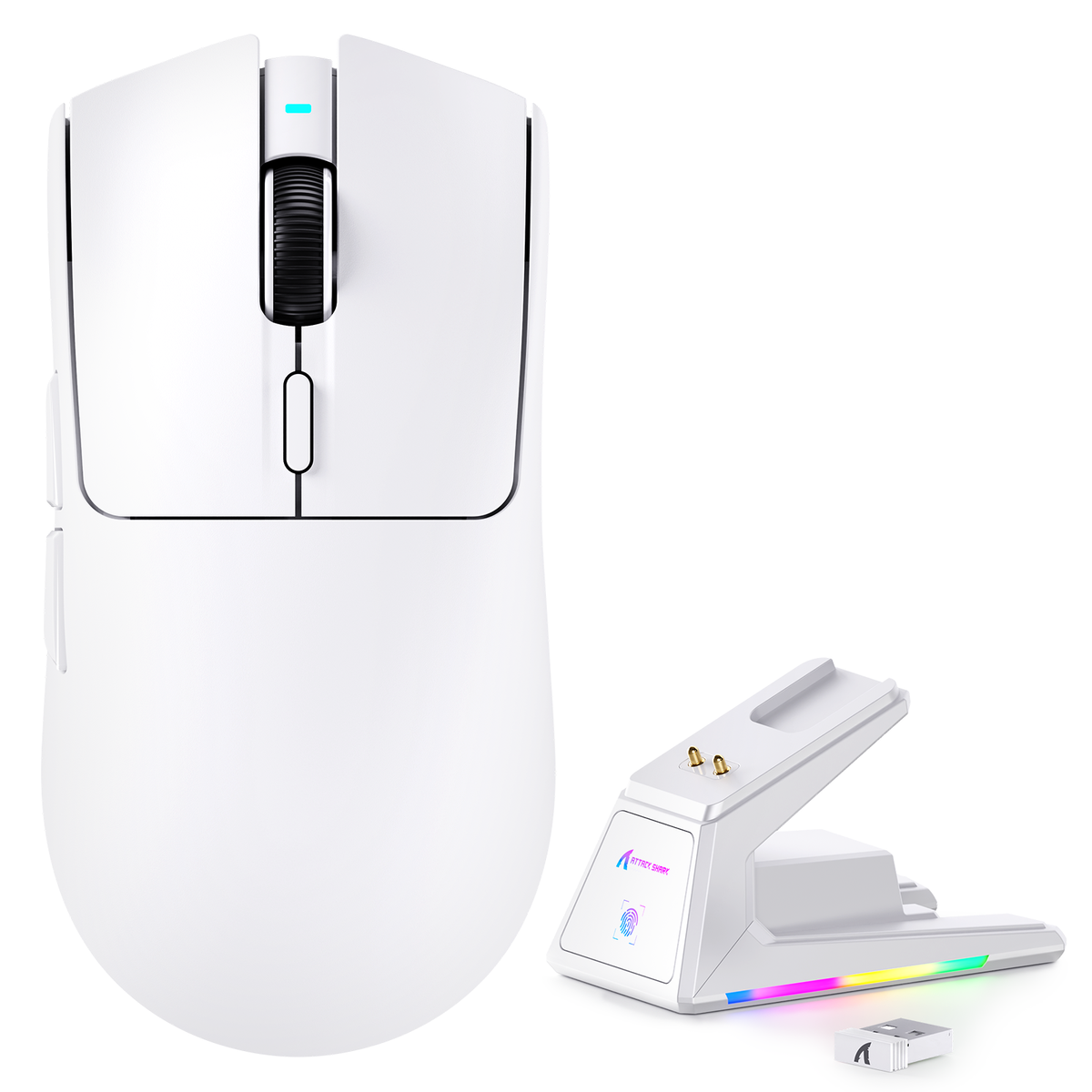
PAW3395-class sensors can be a fully sufficient choice when the rest of the mouse implementation fits your setup. Our X1 PAW3395PRO mouse documents a tri-mode connection, 1000 Hz polling, and Omron switches rated for 100 million clicks, which gives buyers a clear implementation picture to evaluate. Not every PAW3395-class mouse performs identically, since firmware, connection stability, and build quality still vary by product. Our G3 PAW3311 mouse lists a PixArt PAW3311 sensor, wired, 2.4 GHz wireless, and Bluetooth 5.2 connections, and 1000 Hz polling.
What a Newer Tier Actually Adds
A newer tier mainly adds capability headroom, not a guaranteed skill boost. The R5 Ultra PAW3950MAX bundle documents a mouse rated up to 8000 Hz polling with a higher movement-speed ceiling. That headroom is genuinely useful for buyers with a high-refresh display and a system that can sustain the higher polling rate. For everyone else, it is extra capability sitting unused, and the price premium buys margin you may never reach.
Implementation Checks Before Paying More
- Confirm the connection mode and receiver path, including whether wired, 2.4 GHz, or Bluetooth is documented for your use case.
- Check which firmware controls and polling modes the listing actually supports.
- Verify surface compatibility and physical fit, then ask whether the advertised capability solves a problem you actually have. If a high-end listing does not document these details, do not pay a premium for the sensor generation name alone.
Choose a Sensor Tier by Game, Setup, and Budget
Match your sensor tier to how you play, not to the newest label on the box.
Casual and Mixed-Use Gaming
Prioritize clean, usable tracking, comfortable shape, and price over a flagship sensor label. If you are not approaching a movement-speed or polling limit during normal play, a top-tier sensor is not necessary. Spend the savings on comfort and build quality instead.
Competitive FPS on a Budget
Prioritize consistent implementation and a documented sensor range before paying for maximum DPI or 8K polling. Reliable 1000 Hz remains the default value branch unless your specific setup gives you a tested reason to go higher. Shape and grip fit often change your actual performance more than a small sensor-tier difference.
High-Refresh Enthusiast Setups
Consider a newer sensor or 2000 to 8000 Hz polling only when your display, PC, and mouse implementation can support a meaningful test. Treat this as optional headroom and personal preference rather than required competitive gear, and keep any perceptual claim tied to the tested display conditions behind it.
Wired or 2.4 GHz Wireless
- Choose wired if avoiding battery management and radio variables is your priority.
- Choose 2.4 GHz wireless if cable-free movement matters and the listing documents its receiver, battery life, and polling support.
- Do not assume one connection type outperforms the other based on sensor generation alone; verify the documented implementation instead.
Final Value Rule: Buy the Implementation, Not the Headline
Pay for the documented capability and implementation that actually solve your situation, not the newest sensor name. A PAW3395-class sensor remains a strong practical default for most gaming, and a higher tier only earns its price when you can name the setup need it fills, such as sustained high-refresh polling or extra movement-speed headroom. When you are ready to compare options, we invite you to browse our PAW3395 gaming mice, our PAW3950MAX gaming mice, or our high-polling gaming mice to match a documented implementation to your setup.
FAQ
Does higher DPI always mean better accuracy?
No. Maximum DPI is a capability ceiling, not an accuracy rating. Choose a mouse that tracks cleanly at the sensitivity and DPI you actually use, rather than the one with the biggest number on the box.
What is the difference between wired and wireless sensor performance?
Neither connection type is universally better based on the available evidence. Wired mice avoid battery management, while a well-implemented 2.4 GHz wireless mouse can perform just as reliably when its receiver, polling mode, and battery setup are clearly documented.
Do I need a top-tier sensor for casual gaming?
Usually not. If you are not approaching a sensor's movement-speed or polling limits during casual or mixed-use play, you can prioritize shape, comfort, and price over a flagship sensor label without losing anything meaningful.
Is PAW3395 still good for gaming?
Yes. A PAW3395-class sensor remains a practical choice when the mouse around it has a documented implementation that fits your settings and connection needs. A newer tier is mainly a conditional upgrade for buyers with a specific need for extra headroom or higher polling.